THE ILLUSION
Your brain fills the gaps
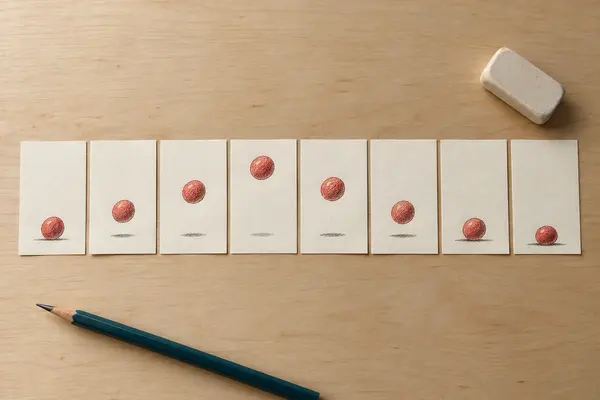
Pictures shown in quick succession are read as one thing moving, not many things blinking.
Two numbersA POCKET-SIZED ILLUSION
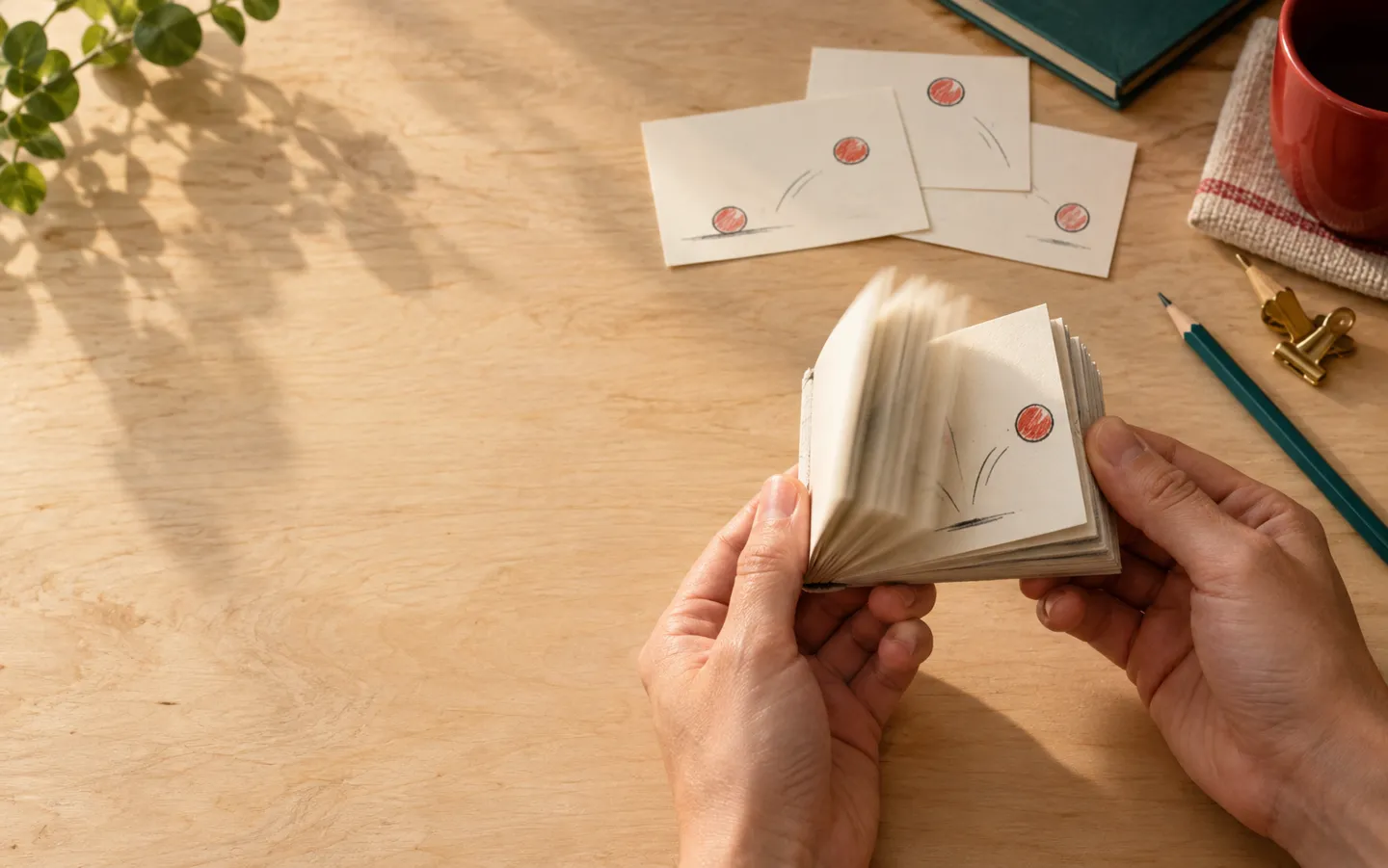
A flipbook is the oldest animation trick you can hold in one hand.
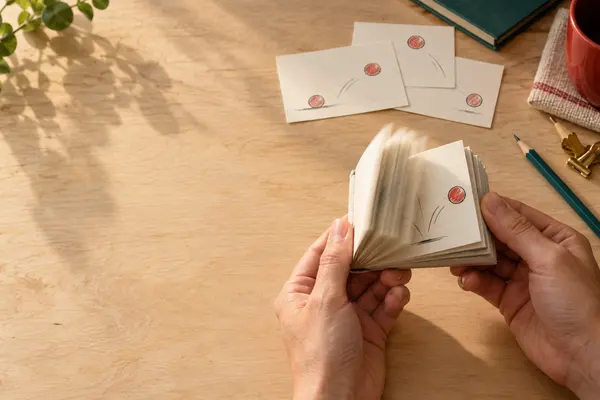
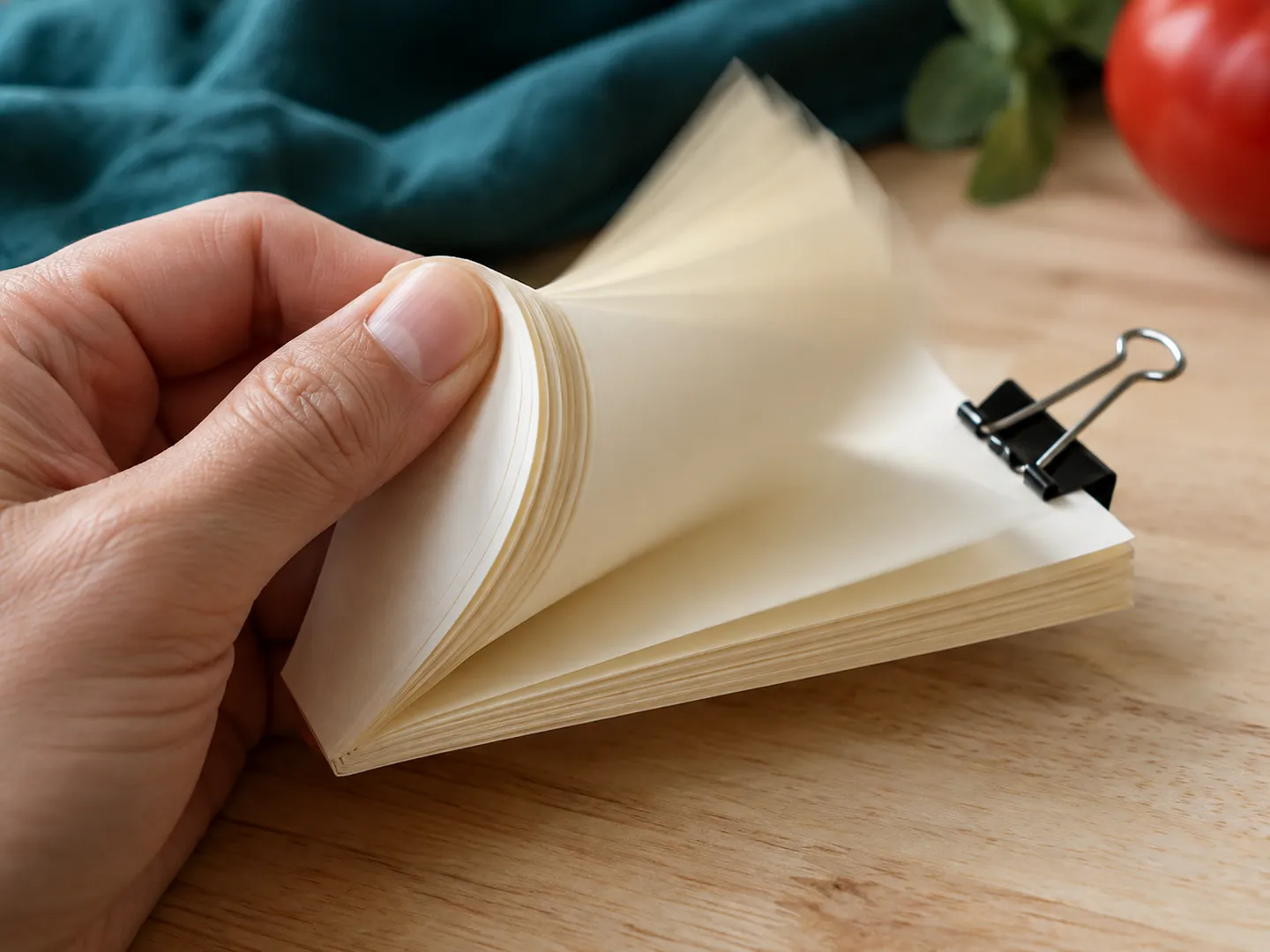
Each page is a still drawing, only slightly different from the one before. Release them quickly under your thumb and your eyes stitch them into movement. Here is where the idea came from, why it works, and how to make one that moves smoothly.
Plain English, with the sources linked.
FLICK page by page
HOW IT WORKS
Three ideas explain every flipbook,
from Victorian toys to your own.
THE ILLUSION
Pictures shown in quick succession are read as one thing moving, not many things blinking.
Two numbersTHE DRAWING
Smoothness comes from small steps between pages, not from drawing skill.
Check your stepTHE HISTORY
The flipbook was patented as the kineograph, decades before cinema screens.
Flipbook factsA QUICK STEP CHECK
Pick how your drawing changes from one page to the next. The guide follows a Science Buddies flipbook activity, which compares a circle moved one line per card with one moved four lines per card.
These are rules of thumb, not exact limits. Flip speed and the size of the book change the result too, so test a few pages early.
TWO NUMBERS WORTH KNOWING
A flipbook can be a palm-sized toy
or a machine with hundreds of frames.
33 pages
Pages in one studio flick book
A film-studio souvenir flick book in Museums Victoria’s collection has 33 paper pages and measures just 43 by 56 millimetres closed. It is held in one hand and flicked through with the thumb of the other.
FLICK BOOK · 1934
742 photos
Photos on one reel
Herman Casler, who filed his Mutoscope patent in November 1894, built a viewer that flipped a drum of photographs past an eyepiece as the viewer turned a crank. The Library of Congress describes one reel holding 742 original photos.
MUTOSCOPE · 1894
Same idea, different scale: whether it is 33 paper pages or hundreds of photographs, each still is shown only briefly and your eyes do the rest.
MAKE ONE TONIGHT
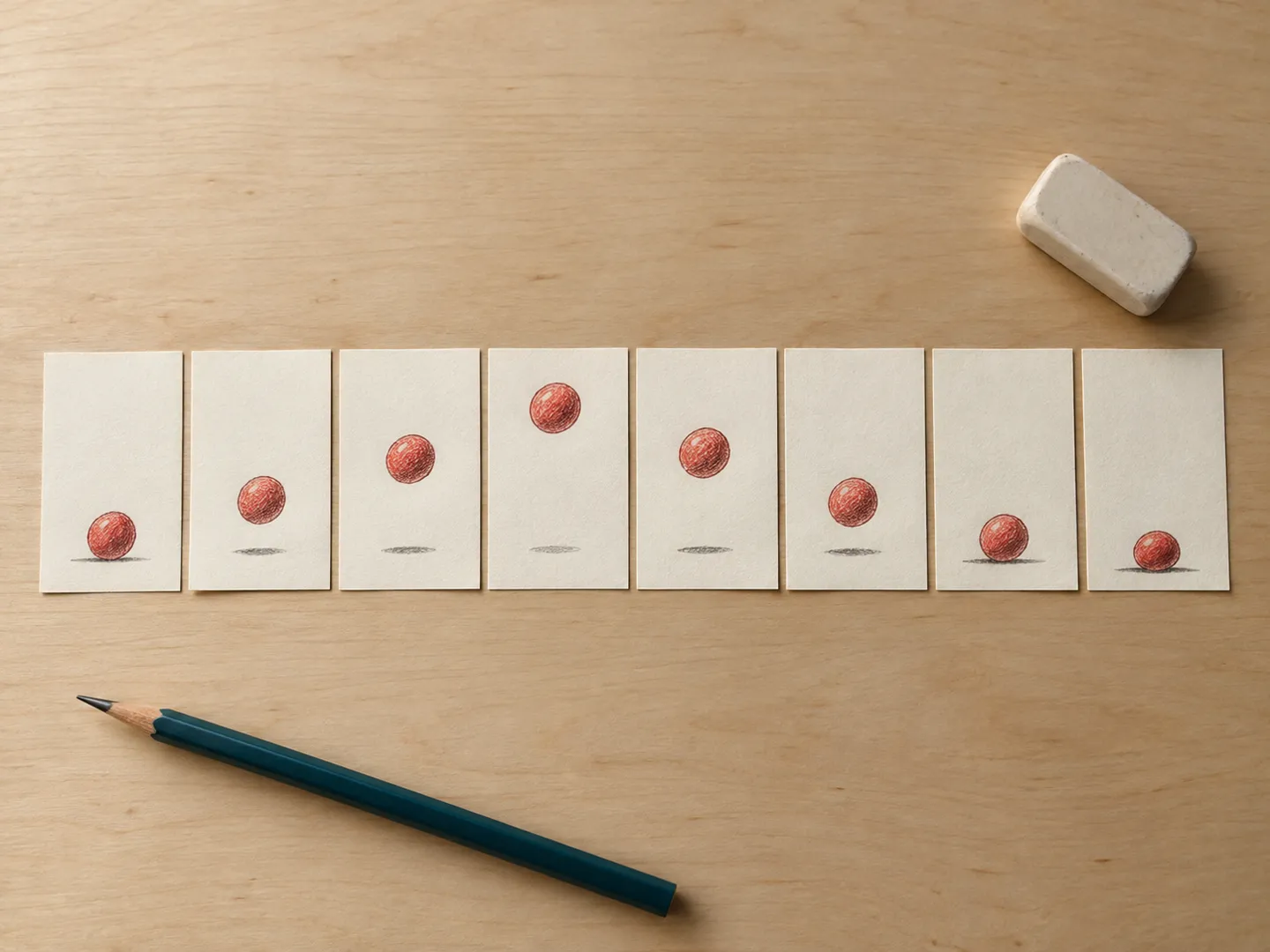
Index cards cut in half work well. Twenty-five pages is enough for a short movement such as a bouncing ball.
Put the action on the half of the card your thumb releases, so it stays visible as the pages flick past.
Shift the drawing only slightly from card to card. Trace the previous card through the paper to keep the rest still.
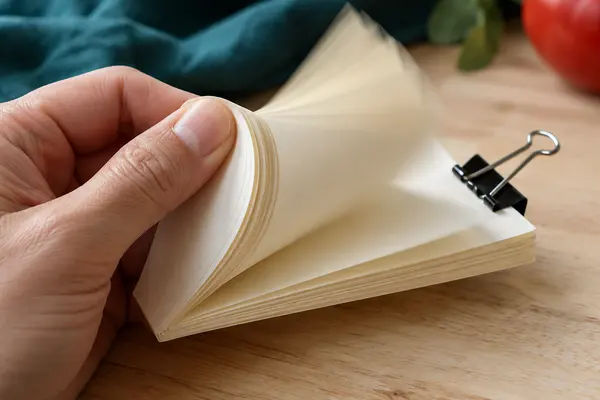
Tap the edges on a table so none stick out, then clip the other end firmly. Re-tap if it flips unevenly.
FLIPBOOK FACTS
The Science Museum Group credits British printer John Barnes Linnett with the first flipbook patent, in 1868, under the name kineograph.
Britannica describes the phi phenomenon as an illusion of movement between two stationary objects shown alternately in quick succession: the same family of effects a flipbook relies on.
The Library of Congress holds Eadweard Muybridge’s 1878 “The Horse in Motion”, a single photograph with twelve frames showing a trotting horse in sequence.
Casler’s Mutoscope (1894) turned the flipbook into a machine: a crank revolved a drum of hundreds of photographs past an eyepiece.
In the Science Buddies activity, a circle moved one line per card reads as motion; skipped three lines at a time, it is likely to jump or flash.
QUICK QUESTIONS
Short answers to the questions people ask most.
The Science Museum Group credits John Barnes Linnett, a British printer, as the first to patent the flipbook, in 1868, under the name kineograph.
Your visual system links pictures shown in quick succession into one moving scene. Psychologists call a related illusion, where alternating stationary objects seem to move, the phi phenomenon.
There is no fixed number. A 1934 film-studio flick book in Museums Victoria’s collection has 33 pages, and a Science Buddies classroom activity uses 25 cards per book.
Small steps work best. In the Science Buddies activity, moving a circle one line per card reads as motion, while skipping three lines tends to make it jump or flash.
A viewer for which Herman Casler filed a patent in 1894. Turning a crank flipped a drum of photographs past an eyepiece, like a large mechanical flipbook; one reel at the Library of Congress holds 742 photos.
Sources
A NAME THAT MOVES
doodleflipbook.com is part of the DoodleSale portfolio. It isn't in an auction right now, but you can ask about leasing it.